
Have you ever wondered what happens after you’re involved in an unfortunate incident and need to navigate the complex world of insurance claims? Understanding the accident claim process can be daunting, but it’s crucial for receiving the compensation you deserve.
A detailed guide to accident claims can walk you through the necessary steps to handle your claim effectively. This guide aims to simplify the claim process, making it easier for you to get back on your feet.
Key Takeaways
Table of Contents
- A clear understanding of the accident claim process is essential.
- Following a step-by-step guide can simplify the claims process.
- Knowing what to expect can reduce stress and anxiety.
- A detailed guide helps in gathering necessary documentation.
- Understanding your rights can lead to better compensation.
Understanding the Basics of Accident Claims
Navigating the aftermath of an accident can be daunting, but understanding the basics of accident claims is a crucial first step. Accident claims are a legal process that allows individuals to seek compensation for damages or injuries sustained during an accident.
Types of Accident Claims in the US
The United States sees a variety of accident claims, each with its unique characteristics and legal considerations. The primary types include:
- Personal Injury Claims: These are filed when an individual suffers physical or psychological harm due to an accident.
- Property Damage Claims: These claims are made when an individual’s property is damaged in an accident.
- Workers’ Compensation Claims: For employees who are injured on the job, these claims provide financial assistance for medical expenses and lost wages.
Understanding the type of claim is essential for determining the appropriate legal pathway and potential compensation.
Key Parties Involved in the Claim Process
The accident claim process involves several key parties, each playing a distinct role:
| Party | Role |
|---|---|
| Claimant | The individual filing the claim, typically the victim of the accident. |
| Insurance Companies | Responsible for evaluating claims and providing compensation. |
| Legal Representatives | Attorneys who represent the claimant or insurance companies in negotiations or legal proceedings. |
Each party’s role is crucial in the claim process, and understanding their responsibilities can help navigate the system more effectively.
Immediate Steps to Take After an Accident
When an accident occurs, the first few minutes are vital for securing your safety, gathering necessary information, and laying the groundwork for a successful insurance claim. The aftermath of an accident can be chaotic, but taking immediate and appropriate action is crucial.
Ensuring Safety and Seeking Medical Attention
The first priority after an accident is to ensure your safety and the safety of others involved. Move to a safe location if possible, and turn on hazard lights to alert other drivers. Check for injuries and provide assistance if needed. It’s also crucial to seek medical attention, even if injuries seem minor, as some conditions may not be immediately apparent.
Seeking medical attention not only ensures your well-being but also creates a medical record that can be vital for your insurance claim. Be sure to follow up with your healthcare provider and keep detailed records of your treatment.
Documenting the Accident Scene
Documenting the accident scene is a critical step in the claims process. Take photographs of the damage to all vehicles involved, as well as any visible injuries. Capture images of the surrounding area, including any skid marks, debris, or traffic signs. This visual evidence can be invaluable in determining fault and supporting your claim.

In addition to photographs, make a note of the location, time, and weather conditions at the time of the accident. This information can help establish the circumstances surrounding the incident.
Gathering Essential Information and Evidence
Gathering essential information and evidence is vital for a successful insurance claim. Exchange contact and insurance information with the other parties involved. Collect the names, phone numbers, and addresses of any witnesses. If law enforcement is called to the scene, obtain a copy of the police report, as this can provide an objective account of the accident.
It’s also important to keep a record of any correspondence related to the accident, including emails, letters, and phone calls. This documentation can help track the progress of your claim and provide evidence if disputes arise.
By following these steps, you can ensure that you are well-prepared to navigate the insurance claims process and achieve a fair outcome.
Notifying the Right Parties
Understanding who to notify after an accident can significantly impact the outcome of your claim. Notifying the right parties is a crucial step in the accident claim process, ensuring that all relevant information is documented and communicated promptly.
Reporting to Insurance Companies
One of the first steps after an accident is to report the incident to your insurance company. This should be done as soon as possible, ideally within a few days of the accident. When reporting, provide as much detail as possible, including the date, time, location, and a description of what happened. It’s also helpful to have your policy number ready.
Insurance companies typically have a dedicated claims department that will guide you through the process. Be prepared to answer questions and provide additional information as requested. Keeping a record of your communication, including dates and times of calls, can be beneficial.
When and How to Contact Law Enforcement
Contacting law enforcement is essential in certain situations, such as when there are injuries, significant property damage, or if the other party involved flees the scene. A police report can provide valuable documentation for your insurance claim and any potential legal proceedings.
When law enforcement arrives, provide an accurate account of the accident. Stick to the facts and avoid speculating or admitting fault. The police report will be an important piece of evidence, so ensure it’s accurate and comprehensive.
Informing Other Relevant Parties
Depending on the circumstances of the accident, there may be other parties that need to be informed. For example, if the accident involved a company vehicle or occurred on company property, your employer’s HR or safety department should be notified. Similarly, if the accident happened on public property, you may need to report it to the relevant local authority.
Keeping a record of who you’ve notified and when can help you stay organized throughout the claims process. It’s also a good idea to follow up with a written statement or email to create a paper trail.
By understanding who to notify and when, you can navigate the aftermath of an accident more effectively. This proactive approach helps ensure that your claim is processed efficiently and that you receive the compensation you’re entitled to.
The Accident Claim Process Step by Step
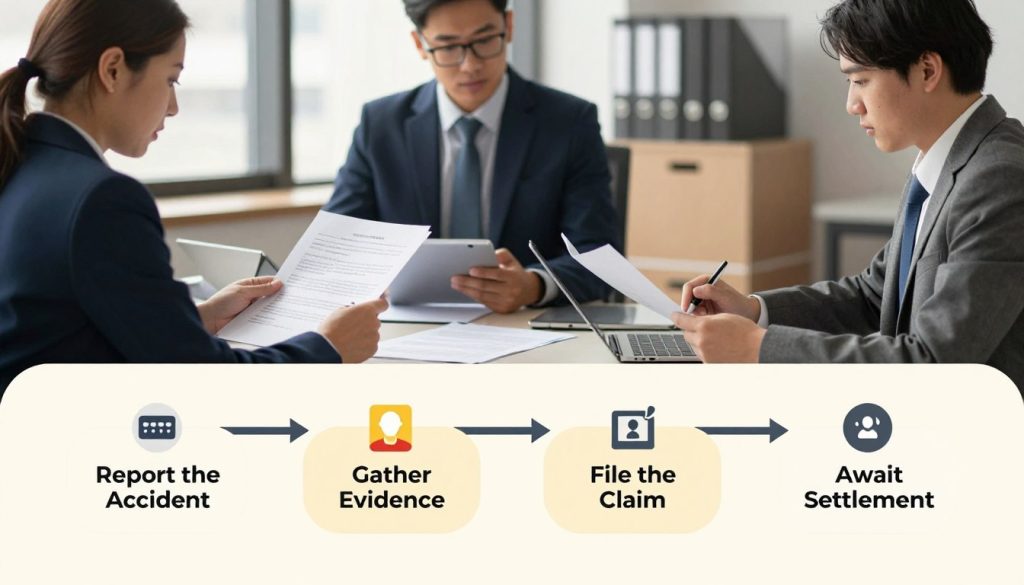
To file a successful accident claim, it’s essential to follow a step-by-step approach. This ensures that all necessary information is gathered and that the claim is processed efficiently.
Filing the Initial Claim Form
The first step in the accident claim process is filing the initial claim form. This form is usually provided by the insurance company and requires details about the accident, including the date, time, location, and a description of what happened.
Key information to include on the claim form:
- Accident details (date, time, location)
- Description of the accident
- Parties involved
- Police report number (if applicable)
Required Documentation and Evidence
Supporting documentation and evidence are crucial for a successful claim. This may include medical records, witness statements, photographs of the accident scene, and any other relevant documents.
Examples of required documentation:
- Medical records and bills
- Witness statements and contact information
- Photographs or videos of the accident scene
- Police report
- Proof of lost wages or income
Working with Claims Adjusters
After filing the claim, you will typically be contacted by a claims adjuster. The adjuster’s role is to investigate the claim, assess the damage, and determine the extent of the insurance company’s liability.
Tips for working with claims adjusters:
- Be cooperative and provide requested information promptly
- Keep a record of all correspondence
- Ask questions if you’re unsure about the process
- Seek clarification on any points you’re not sure about
Navigating the Claim Evaluation and Settlement
Navigating the claim evaluation and settlement process requires a clear understanding of what insurance companies look for in a claim. This knowledge can significantly impact the outcome of your accident claim.
Understanding How Claims Are Evaluated
Insurance companies evaluate claims based on several key factors, including the severity of injuries, the extent of property damage, and the determination of fault. Understanding these factors can help you prepare a stronger claim.
The evaluation process involves assessing the evidence you’ve collected, such as medical records, police reports, and witness statements. It’s essential to ensure that your claim is well-documented to support your case.
Types of Compensation Available
There are several types of compensation available for accident claims, including medical expenses, lost wages, and pain and suffering. The type and amount of compensation you’re eligible for will depend on the specifics of your case.
| Type of Compensation | Description | Factors Influencing Award |
|---|---|---|
| Medical Expenses | Covers costs of medical treatment related to the accident | Severity of injuries, medical bills |
| Lost Wages | Compensates for income lost due to inability to work | Duration of recovery, income level |
| Pain and Suffering | Compensates for physical and emotional distress | Severity of injuries, impact on quality of life |
Negotiation Strategies for Fair Compensation
Negotiating with insurance companies can be challenging, but there are strategies that can help you achieve fair compensation. It’s crucial to be well-prepared and persistent.
- Understand your claim’s value based on the evidence and damages.
- Be prepared to negotiate and don’t settle for the first offer.
- Keep detailed records of all communications with the insurance company.
By understanding how claims are evaluated, the types of compensation available, and employing effective negotiation strategies, you can navigate the claim evaluation and settlement process more effectively.
Legal Considerations and Common Pitfalls
Navigating the legal landscape after an accident can be daunting, but understanding the key considerations is crucial for a successful claim. Accident claims are subject to various legal nuances that can significantly impact the outcome.
Statute of Limitations for Accident Claims
The statute of limitations is a critical factor in accident claims, as it sets a time limit for filing a claim. This timeframe varies by state, ranging from one to three years, typically. It’s essential to be aware of the specific statute of limitations in your state to avoid missing the deadline.
| State | Statute of Limitations |
|---|---|
| California | 2 years |
| New York | 3 years |
| Texas | 2 years |
When to Hire an Attorney
While it’s possible to handle an accident claim independently, knowing when to hire an attorney can be beneficial. If you’re unsure about the severity of your injuries, the complexity of your case, or the negotiation process, seeking legal counsel is advisable.
Understanding Your Rights
Understanding your rights as a claimant is vital. You have the right to fair compensation for your injuries and damages. Being informed about the claims process and your rights can help you navigate the system more effectively.
Avoiding Common Mistakes in the Claim Process
Common mistakes in the claim process include failing to document evidence, not seeking medical attention promptly, and underestimating the value of your claim. Being aware of these potential pitfalls can help you avoid them and ensure a smoother claims process.
- Document all evidence related to the accident.
- Seek medical attention immediately after the accident.
- Consult with an attorney to understand the value of your claim.

Conclusion
Navigating the accident claim process can be complex, but with the right guidance, you can successfully handle your claim. Understanding the accident claim procedure explained in this comprehensive guide is crucial to ensuring you receive fair compensation for your losses.
By following the steps outlined, from ensuring safety and documenting the accident scene to working with claims adjusters and negotiating a settlement, you can confidently manage your accident claim. This guide to handling an accident claim has provided you with the necessary tools and knowledge to make informed decisions throughout the process.
Remember, being prepared and knowing your rights are key to a successful claim. Stay informed, keep detailed records, and don’t hesitate to seek professional help when needed. With this guide, you’re now better equipped to handle the accident claim process and achieve a favorable outcome.